
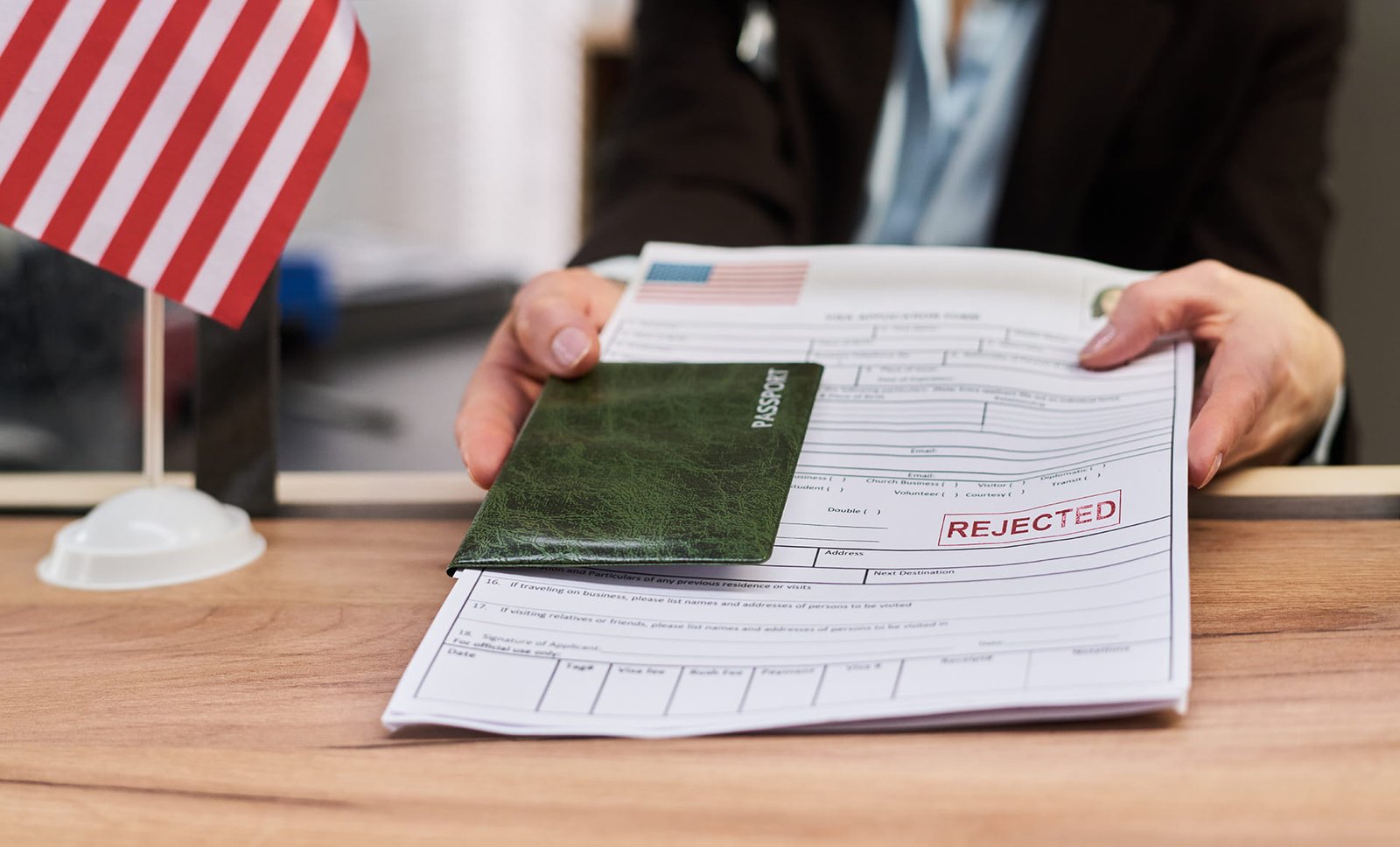
Understand Your Visa Refusal.
Learn what your refusal code means, why your U.S. visa may have been refused, and what your next step may be.
Why was your U.S. visa refused?
A visa refusal does not always mean the same thing. The legal section listed on your refusal notice can make a major difference. Learn what common refusal codes mean and what your next step may be.
Not every refusal means your case is permanently closed.
U.S. visa applications can be refused for very different reasons. Some refusals may be resolved by providing additional documents. Others may require a new application, a meaningful change in circumstances, or professional legal review.
Your refusal letter normally identifies the section of U.S. immigration law that applies to your case.
INA Section 214(b)
One of the most common refusal sections for temporary U.S. visas.
A refusal under Section 214(b) generally means that the consular officer was not sufficiently satisfied that you qualified for the nonimmigrant visa category you applied for, or that you overcame the legal presumption of immigrant intent where that requirement applies.
What may the officer consider?
- Your purpose of travel
- Your employment or business situation
- Your financial circumstances
- Your family and personal ties outside the United States
- Your travel history
- Your overall circumstances and interview answers
A 214(b) refusal is not permanent, but there is no formal appeal process. If you apply again, you normally submit a new application, pay a new fee and attend a new interview.
INA Section 221(g)
Your application may need additional documents, information or further review.
A 221(g) refusal can happen when the consular officer does not yet have enough information to determine that you qualify for the visa.
Common situations include:
- Missing supporting documents
- Incomplete application information
- Additional verification is required
- The case requires administrative processing
Follow the instructions from the embassy or consulate carefully and provide the requested information as completely as possible.
Administrative Processing
Some visa applications require additional review after the interview.
Administrative processing can happen when additional information from other sources is needed before a final eligibility determination can be made.
There is no universal processing time. The duration depends on the individual case.
Follow any instructions you were given by the consular officer. If additional documents are requested, submit them according to the embassy's instructions.
Material Misrepresentation or Fraud
This is one of the most serious visa ineligibility grounds.
Willfully providing false information or hiding an important material fact in order to obtain a visa may lead to serious immigration consequences.
Examples may include:
- False employment information
- False relationship information
- Fake financial documents
- False travel history
- Misrepresenting the real purpose of travel
If your refusal involves fraud or misrepresentation, consider obtaining qualified immigration legal advice before applying again.
Previous Overstay or Unlawful Presence
Remaining in the United States longer than authorized can affect future visa eligibility.
Depending on the amount of unlawful presence and the facts of the case, immigration law may impose restrictions on returning to the United States.
These cases can become legally complex and should be reviewed carefully before a new application.
Criminal History or Drug Violations
Certain criminal convictions or drug-related violations can make an applicant ineligible for a visa.
The effect depends on the exact offense, the law involved, the applicant's age, sentence and other circumstances.
Do not assume that every arrest or conviction has the same immigration consequence.
Financial Support and Public Charge
Some immigrant visa cases require sufficient financial support.
If an Affidavit of Support is required and the financial requirements are not met, the applicant may face a refusal under the public charge provisions.
The exact requirements depend on the visa category and the facts of the case.
Can you apply again after a U.S. visa refusal?
In many situations, yes — but the correct next step depends on the refusal reason.
New application
Usually requires a new application, fee and interview. A meaningful change in circumstances may be important.
Submit requested information
If the embassy asked for documents or information, follow the instructions provided with your case.
Case-specific review
Some grounds may require a waiver or legal analysis. Not every ineligibility can be resolved the same way.
What code is written on your refusal notice?
Select the code you received to see a general explanation.
Understand your refusal before you apply again.
A second application should be based on the actual reason for the refusal, not guesswork.