
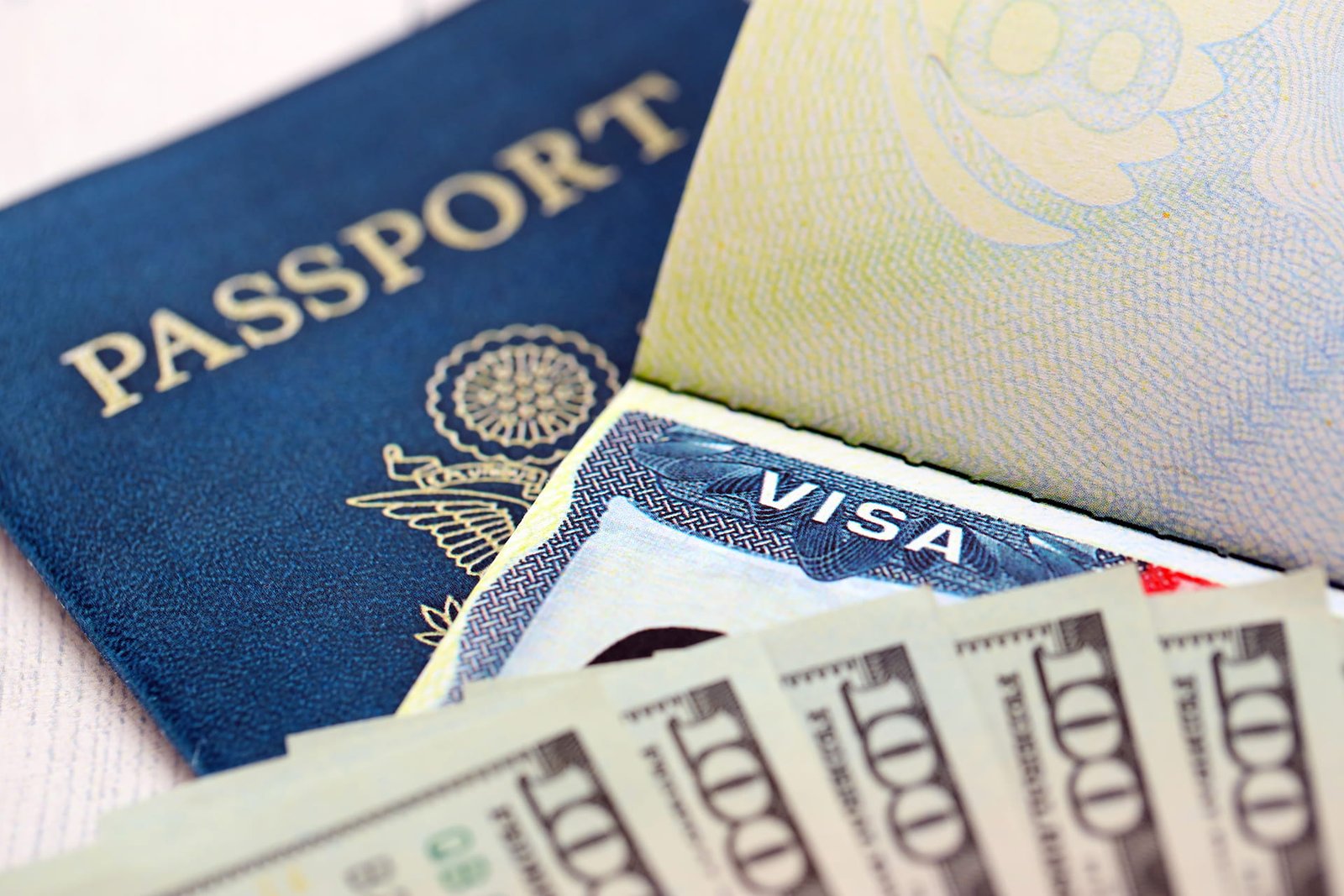
Your U.S. Visa Questions Answered
Find clear answers to common questions about U.S. visas, applications, interviews, documents, refusals and immigration processes.
Explore QuestionsFind answers by visa type or application stage.
Search the complete FAQ or select a category to quickly find questions related to your situation.
General U.S. Visa Questions
A U.S. visa is a travel document placed in or associated with your passport that allows you to travel to a U.S. port of entry and request admission for a specific purpose.
No. A visa allows you to travel to a U.S. port of entry. Final admission is determined by U.S. Customs and Border Protection when you arrive.
Nonimmigrant visas are generally for temporary purposes such as tourism, study or temporary work. Immigrant visas are intended for people immigrating to the United States for permanent residence.
The correct category depends primarily on your purpose of travel or immigration. Tourism, study, employment, investment, marriage and permanent immigration use different visa categories.
Explore U.S. Visa TypesApply as early as practical. Appointment availability varies by embassy, season and visa category, and some cases may require additional processing.
Current Department of State guidance generally directs nonimmigrant visa applicants to schedule interviews in their country of nationality or residence, or at the designated processing post where routine operations are unavailable. Applying elsewhere can create additional difficulties.
Usually no. Each person who needs a visa generally needs their own application, even when family members travel or immigrate together.
The visa expiration date does not automatically determine how long you may remain in the United States. Your authorized period of stay is determined when you are admitted.
Tourist & Business Visa Questions
B-1 is generally for temporary business activities, while B-2 is generally for tourism, vacation, family visits and certain other temporary visitor purposes. Many visas are issued as combined B-1/B-2 visas.
A visitor visa does not authorize ordinary employment in the United States. Employment generally requires an appropriate work-authorized status.
Degree study and other formal study generally require an appropriate student visa. A B-2 visitor may engage in certain short recreational courses that are not for academic credit.
You generally should not make non-refundable travel commitments solely because you have applied for a visa. Visa issuance is never guaranteed in advance.
Your travel plans should be credible and understandable, but requirements can vary. Do not create false reservations or provide information that is not accurate.
There is no universal bank balance that guarantees a B-1/B-2 visa. Your financial situation should make sense for the length, purpose and cost of your planned trip.
An invitation letter is not automatically required for every visitor visa case. The overall circumstances of the applicant and purpose of travel are more important than having a generic invitation letter.
Another person can pay some or all of your travel costs, but you should accurately explain the relationship, funding arrangement and purpose of the trip.
Yes. Visiting friends or relatives is a common permitted B-2 visitor activity.
B-1 activities may include consulting with business associates, attending qualifying conferences or meetings and negotiating contracts, among other permitted activities.
Student & Exchange Visa Questions
F-1 is commonly used for academic study and language programs, while M-1 is generally used for vocational or other recognized non-academic programs.
Form I-20 is issued by an eligible U.S. school to qualifying F or M students and contains important information about the school, program and SEVIS record.
Certain F, M and J applicants must pay the SEVIS I-901 fee associated with their SEVIS record before the visa process proceeds.
J-1 status is used for approved exchange visitor programs such as certain trainees, interns, researchers, teachers and other cultural or educational exchanges.
DS-2019 is the Certificate of Eligibility issued through an authorized exchange program sponsor for qualifying J-1 participants.
Student employment rules depend on the type of work, your status and authorization. Do not assume an F-1 visa gives unrestricted permission to work.
You should understand your program, school, tuition, estimated expenses, program duration and how the course relates to your academic or professional goals.
Family funding is possible. Your financial evidence should clearly show who is supporting you and how your tuition and living costs will be covered.
Temporary Work Visa Questions
Many employment visa categories require a U.S. employer or petitioner to file a petition before the applicant applies for the visa.
Form I-129 is the Petition for a Nonimmigrant Worker. It is used by petitioners for several temporary worker classifications.
Form I-797 is a USCIS Notice of Action. Depending on the type of notice, it may document receipt, approval or another action taken by USCIS.
H-1B is a petition-based temporary worker classification generally associated with qualifying specialty occupation employment and related requirements.
L classification is used for certain qualifying intracompany transfers involving related companies and eligible employees.
O-1 is a petition-based classification for certain individuals with extraordinary ability or achievement who meet the applicable eligibility criteria.
Work authorization is often connected to a specific petition, employer and classification. A change of employer may require a new filing or other immigration action depending on the category.
Investor Visa Questions
E-2 is a nonimmigrant treaty investor category for qualifying nationals who invest in and develop or direct a qualifying U.S. enterprise.
E-2 does not use one universal dollar amount for every business. The investment must satisfy the applicable legal requirements and be substantial in relation to the enterprise.
No. E-2 is a nonimmigrant category. It is different from immigrant investor pathways such as EB-5.
EB-5 is an immigrant investor pathway administered through USCIS and has different requirements and procedures from E-2.
Business plans and supporting business evidence can be important in investment cases. The exact evidence depends on the visa category and the enterprise.
Investment cases can require evidence concerning the lawful source and movement of funds. Financial records should be clear and consistent.
Fiance, Marriage & Family Visa Questions
K-1 is a visa category for a qualifying foreign fiance of a U.S. citizen who intends to travel to the United States and marry the petitioner within the required period after admission.
Form I-129F is the USCIS petition generally filed by the qualifying U.S. citizen petitioner to begin the K-1 fiance process.
K-1 is generally for an unmarried fiance of a U.S. citizen who plans to marry after entering the United States. CR-1 is an immigrant spouse category for qualifying married couples.
The classification generally depends on the duration of the marriage at the relevant immigration stage. Conditional residence rules can apply to newer marriages.
I-130 is the Petition for Alien Relative. It is used to establish certain qualifying family relationships for family-based immigration.
Form I-864 is the Affidavit of Support used in many family-based and certain other immigrant cases to document the required financial sponsorship.
Depending on the case, evidence may include photographs, travel history, communication records, shared residence, financial documents and other records showing a genuine ongoing relationship.
Immigrant visa applicants generally complete a required medical examination with an authorized physician according to the instructions for their case and interview location.
Application & Document Questions
DS-160 is the online nonimmigrant visa application used for temporary visa categories and K visas. It is submitted electronically.
After submitting DS-160, applicants should keep and print the barcode confirmation page. The entire application generally does not need to be printed for the interview.
DS-160 answers must generally be entered in English using English characters, except where the application specifically requests information such as a name in the native alphabet.
Incorrect or incomplete answers can create problems and may require correction or a new application. Always follow the instructions of the embassy or consulate handling your appointment.
DS-260 is the online immigrant visa application used in immigrant visa processing through the Consular Electronic Application Center.
Immigrant visa applicants typically need their NVC case number and invoice identification information. Diversity Visa applicants use their DV case information.
Translation requirements depend on the application process, issuing country and specific instructions. Follow the document requirements for your visa category and processing location.
Requirements vary by visa category. Immigrant visa cases in particular may require original or certified civil documents according to interview instructions.
Open Document ChecklistPassport validity rules can depend on the visa category and nationality. Visitor visa guidance generally requires sufficient passport validity beyond the intended stay, subject to applicable country-specific agreements.
Visa Interview Questions
Interview requirements depend on visa category, applicant circumstances and current rules. Even where an exception may apply, a consular officer can require an interview.
There is no fixed interview length. Some interviews are brief while others involve additional questions, depending on the applicant and case.
Questions depend on the visa category and your circumstances. Common areas include travel purpose, finances, education, employment, family relationships, petition details and immigration history.
Practice Interview QuestionsNo. Know the facts of your case and answer truthfully. Memorized scripts can sound unnatural and may create inconsistencies with your application.
Interview language options depend on the embassy, visa category and local procedures. Check the instructions for the post where you will interview.
Digital fingerprint collection is part of the visa process for many applicants, subject to applicable age and procedural rules.
Do not invent an answer. If you genuinely do not know or remember something, say so accurately rather than creating information.
Refusal, 221(g) & Processing Questions
Section 214(b) commonly applies in nonimmigrant visa cases when the applicant has not established eligibility for the requested nonimmigrant classification under the applicable legal standard.
A new application may be possible, but a new application requires a new process and fee. Consider whether your circumstances or evidence meaningfully address the issues relevant to the previous application.
A case under 221(g) may require additional documents, information or administrative processing before a final determination can be made.
Some visa applications require additional review after the interview. Processing time varies according to the circumstances of the individual case.
There is no universal processing period. Timing depends on the individual case and the additional review required.
Not necessarily. The effect of a prior refusal depends on the legal basis for the refusal and your circumstances. Some grounds are very different from others.
Open Visa Refusal GuideFollow the specific instructions provided for your case. Submit only through the method requested by the embassy, consulate or processing authority.
Options depend heavily on the type and legal basis of the refusal. A routine nonimmigrant refusal is not the same as an immigrant visa finding or a statutory inadmissibility issue.
No matching question found.
Try another keyword or browse all FAQ categories.
Need more than a quick answer?
Some visa questions depend on the details of your case.
Use our tools or contact us if you need a more personalized review of your situation.